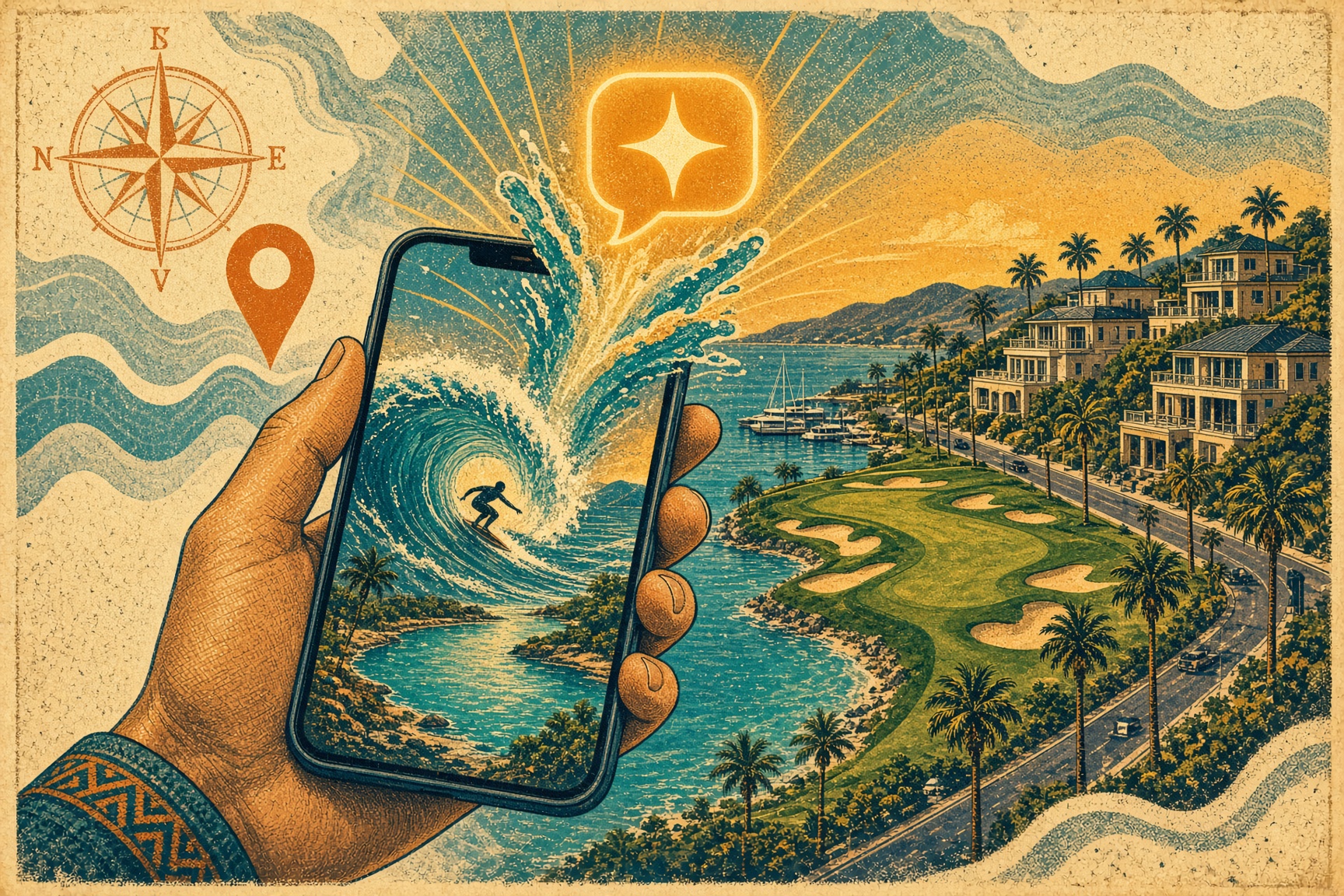
AI is changing surf park discovery in two ways. Travelers now describe the trip they want instead of searching for a place, and more searches end on the results page without a click. The surf destinations that still get noticed are the ones AI tools cite as a source.
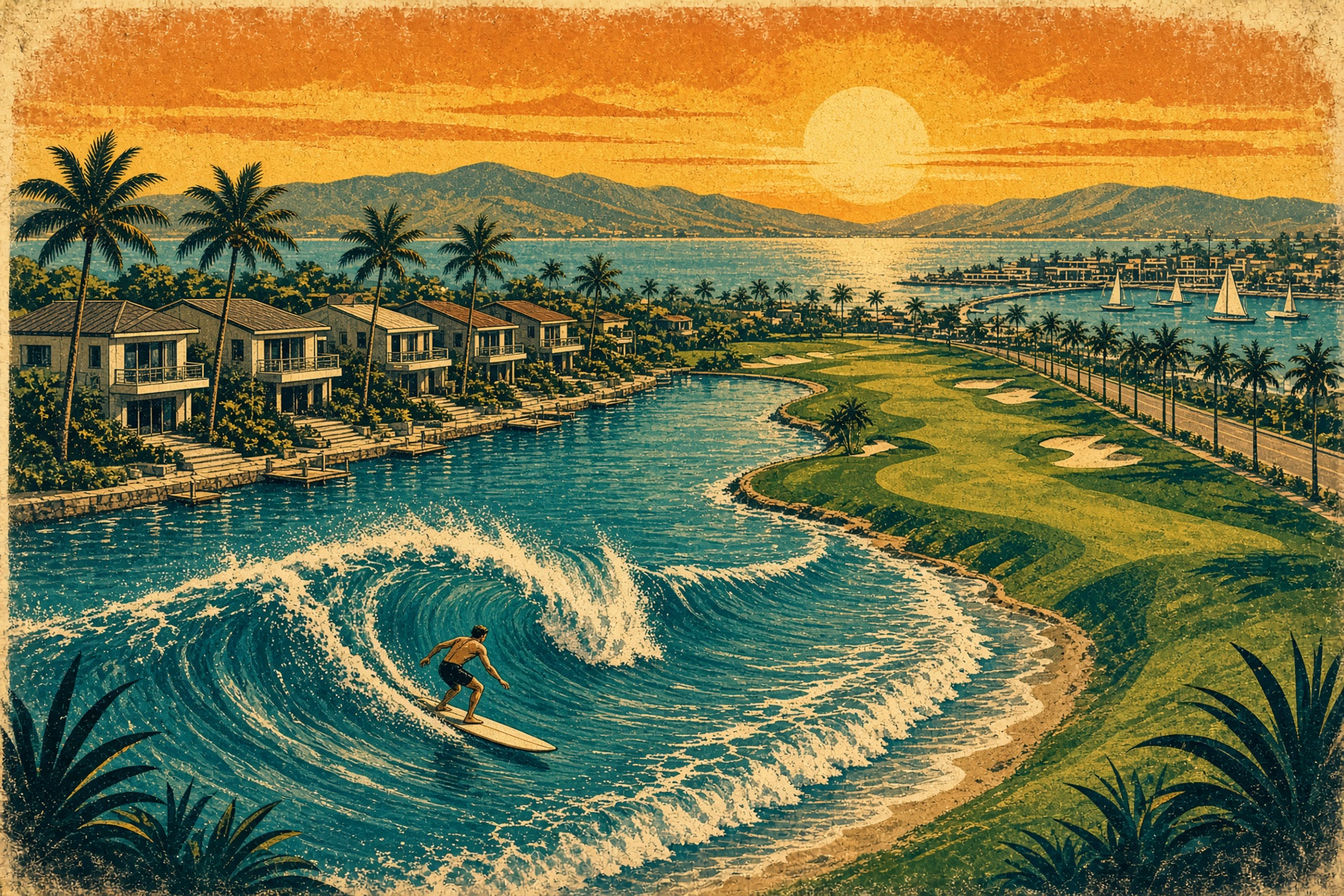
Picture a traveler asking an AI assistant: “Where can I take my family on vacation where one person can surf, the kids have things to do, and we can all stay at a resort?” Or a beginner asking: “Where can I learn to surf without going to the ocean?”
Neither question says “surf park,” but a surf destination is the right answer to both. That gap between how people ask and how surf parks describe themselves is the new discovery problem.
What the 2026 data shows
| Finding | Source |
|---|---|
| 68% of U.S. Google searches ended without a click from January to April 2026, up from about 60% in 2024 | SparkToro |
| AI Overviews appeared on more than 20% of Google searches | SparkToro |
| About 36% of informational queries showed an AI Overview, compared with about 5% of transactional queries | Seer Interactive, via Search Engine Land |
| Pages cited in an AI Overview earned about 2.1% click-through, compared with about 0.9% for pages left out | Seer Interactive, via Search Engine Land |
| Branded, local and high-intent transactional searches are the least affected by zero-click behavior | SparkToro |
What that means for surf parks
The research phase is where AI answers show up most. Questions like “can beginners surf at a wave pool?”, “family resorts with surfing” or “best surf parks in the US” are informational. That’s the stage where AI Overviews appear most often, and where many people get their answer without clicking.
Being cited beats being skipped. When an AI answer appears, the sources it names still earn clicks and, just as important, brand exposure at the moment someone is forming a shortlist. Being left out of the answer means being left out of the shortlist.
Booking searches still send clicks. Once someone searches the park’s name, “surf lessons near me” or “book a surf session,” they’re far more likely to click. That makes branded and local visibility, including the Google Business Profile, just as important as ever. Resorts with several businesses on site face a specific version of this, covered in our guide to managing multiple Google Business Profiles for a surf resort.
Why surf parks are especially exposed
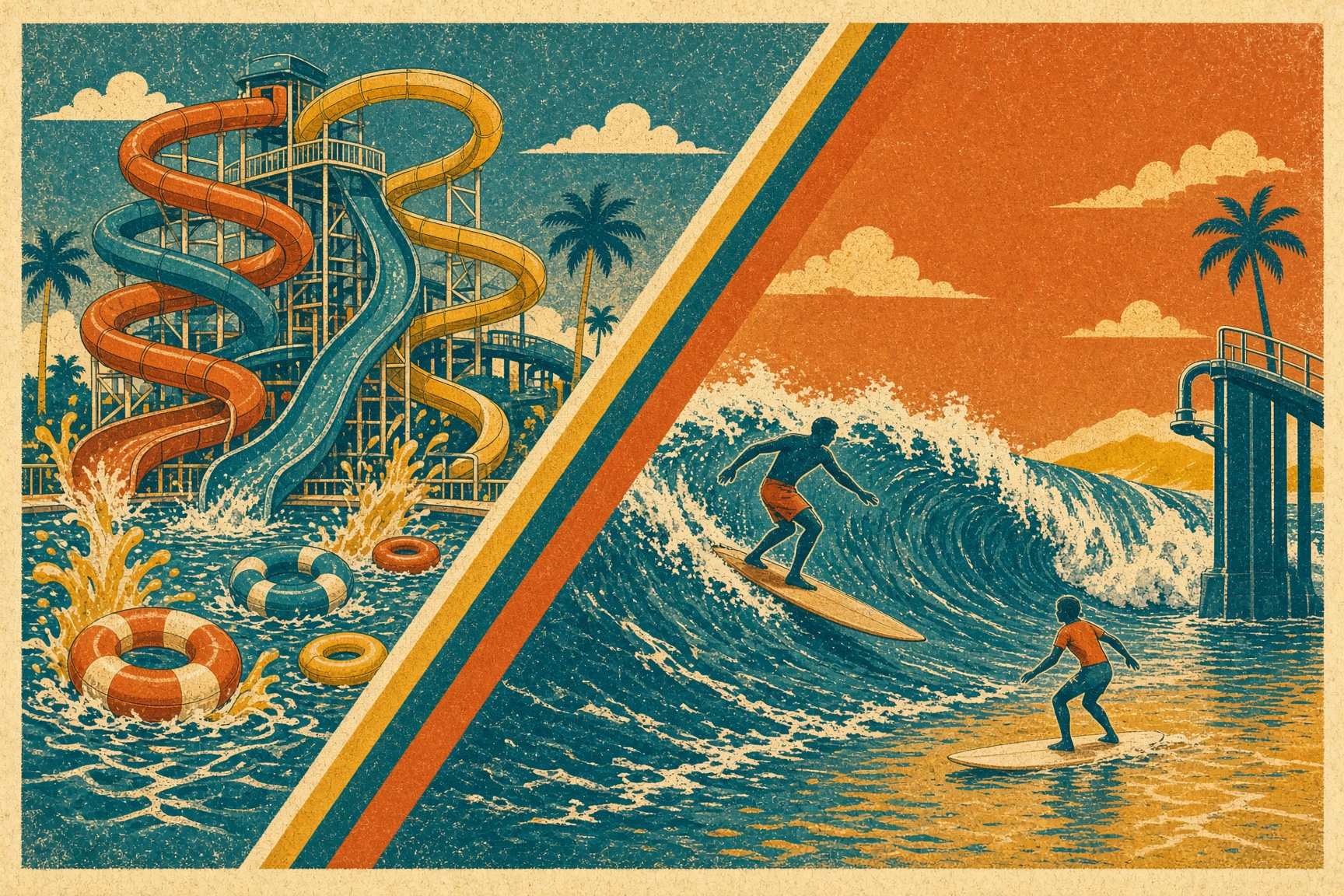
Surf parks combine something familiar (surfing) with something new (surfing in a lagoon, far from the ocean). Many people don’t know what to search for. Some assume surf parks are water parks; others assume they’re only for experienced surfers. We answer those basics in What Is a Surf Park?
That confusion plays out directly in AI answers. If an AI tool can’t tell from a surf park’s website and outside coverage that the park welcomes beginners, offers lodging or hosts events, it has no reason to mention the park when someone asks about those things.
What surf destinations can do about it
The practical playbook, answer engine optimization (AEO), is covered step by step in our guide What AEO Means for Surf Parks and Destination Resorts. In short, it comes down to three things:
- Clear answers on your own site. Pages that answer real questions directly, with question-based headings and plain facts.
- The same facts everywhere. Name, location, hours, skill levels and pricing that match across the website, Google Business Profile, social profiles and partner listings.
- Confirmation from trusted sources. Coverage from industry outlets, local news and tourism boards that backs up what the site says.
What AI visibility can and can’t promise
No agency can guarantee placement in AI-generated answers. The tools change often, and each one chooses sources differently. The data is also still moving: Seer’s research showed AI Overview click- through rising from 1.3% in December 2025 to 2.4% in February 2026. What a surf park controls is whether its information is clear, consistent and easy to verify. That’s what makes it a likely source.
Preparing for the next generation of visitors
Surf parks have to help people who already want to surf find the right place, and help people who don’t know they want to surf discover why a surf park belongs in their plans. The next visitor may not search for the wave. They may ask an AI for everything the wave makes possible.
Frequently asked questions
How are people using AI to find surf parks?
They describe the trip they want, such as a family vacation where one person can surf, and let AI tools suggest places. Google AI Overviews and chat assistants then pull answers from websites and other sources they trust.
Do AI Overviews reduce traffic to surf park websites?
For research-style questions, often yes. In early 2026 most U.S. Google searches ended without a click. Searches for a park’s name and booking- related searches are much less affected.
Is it still worth ranking in Google if AI answers the question?
Yes. AI tools draw on pages that search engines can find and understand, and pages cited in AI Overviews earn more clicks than pages that aren’t.
Related reading: How Long Does It Take to Build a Surf Park? · The Billion-Dollar Vision Beyond the Wave
Want your surf park to be easier for AI tools to find and cite? See Ohana’s Managed SEO + AEO service.