
1. The Evolution of the Surf Destination
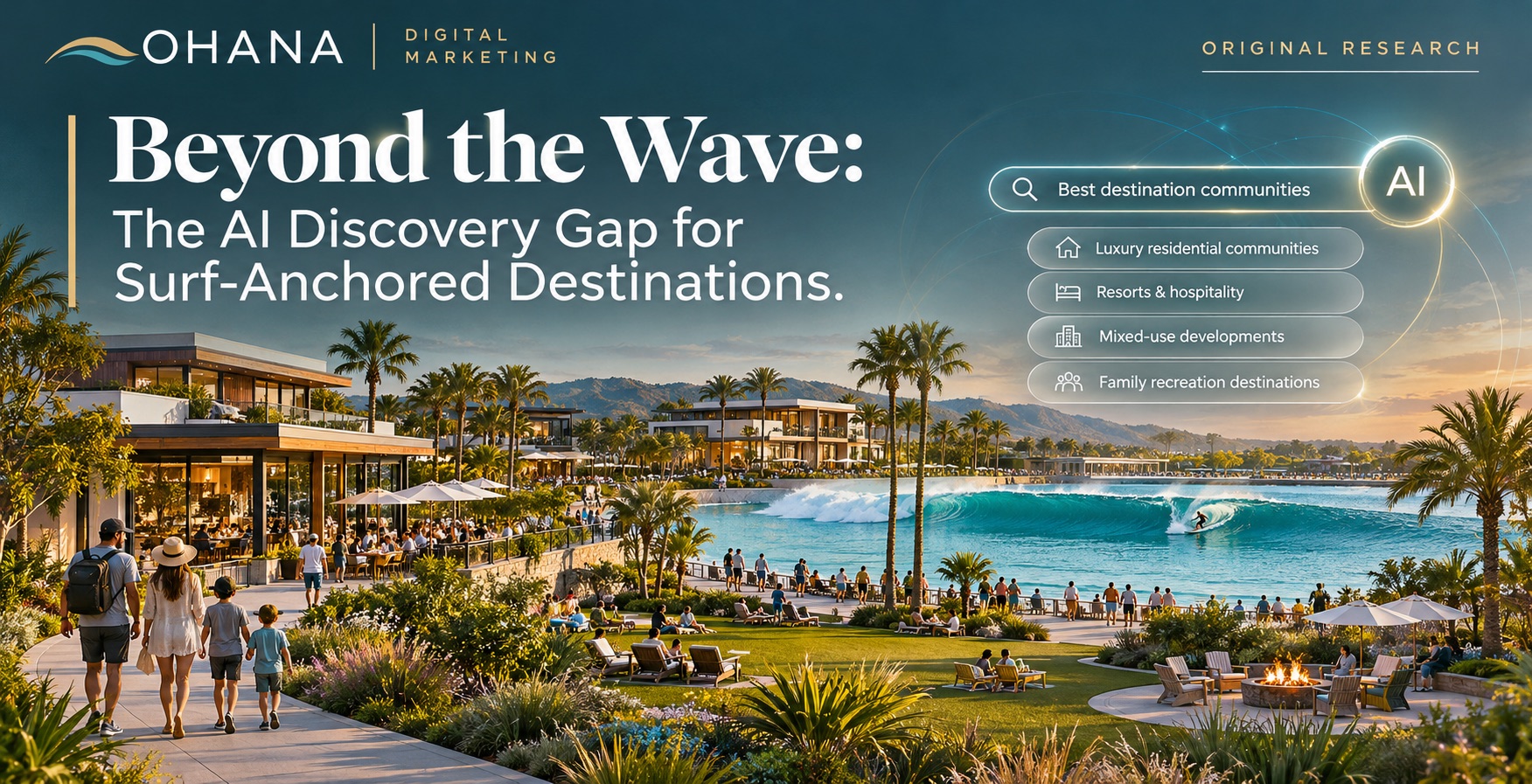
Artificial wave technology has introduced opportunities to bring surfing into locations far removed from the ocean.
But the industry’s evolution extends beyond the wave itself.
Developers are incorporating surf lagoons into larger projects that include residential properties, hotels, restaurants, wellness facilities, entertainment venues and outdoor recreation.
In these developments, surfing serves as a lifestyle anchor, much like golf within a private residential community or skiing within a mountain resort.
This evolution creates opportunities to reach audiences who may not initially identify themselves as surfers.
A prospective homebuyer may be searching for a luxury community with resort-style amenities. A family may be looking for a vacation destination with distinctive water attractions. A traveler may be researching a resort that combines accommodations, dining and outdoor recreation.
Each represents a potential audience for a surf-centered destination.
The question is whether these developments are appearing within those broader discovery experiences.
2. Research Methodology
Research was conducted on November 13, 2026, using three AI-powered platforms: ChatGPT, Google Gemini and Perplexity.
Four general destination search categories were selected to reflect audiences that could reasonably be interested in surf-centered developments.
The prompts intentionally avoided surfing-specific terminology. Each requested recommendations for destinations within the United States and included projects under development.
Search Prompt 1: Luxury Residential Communities
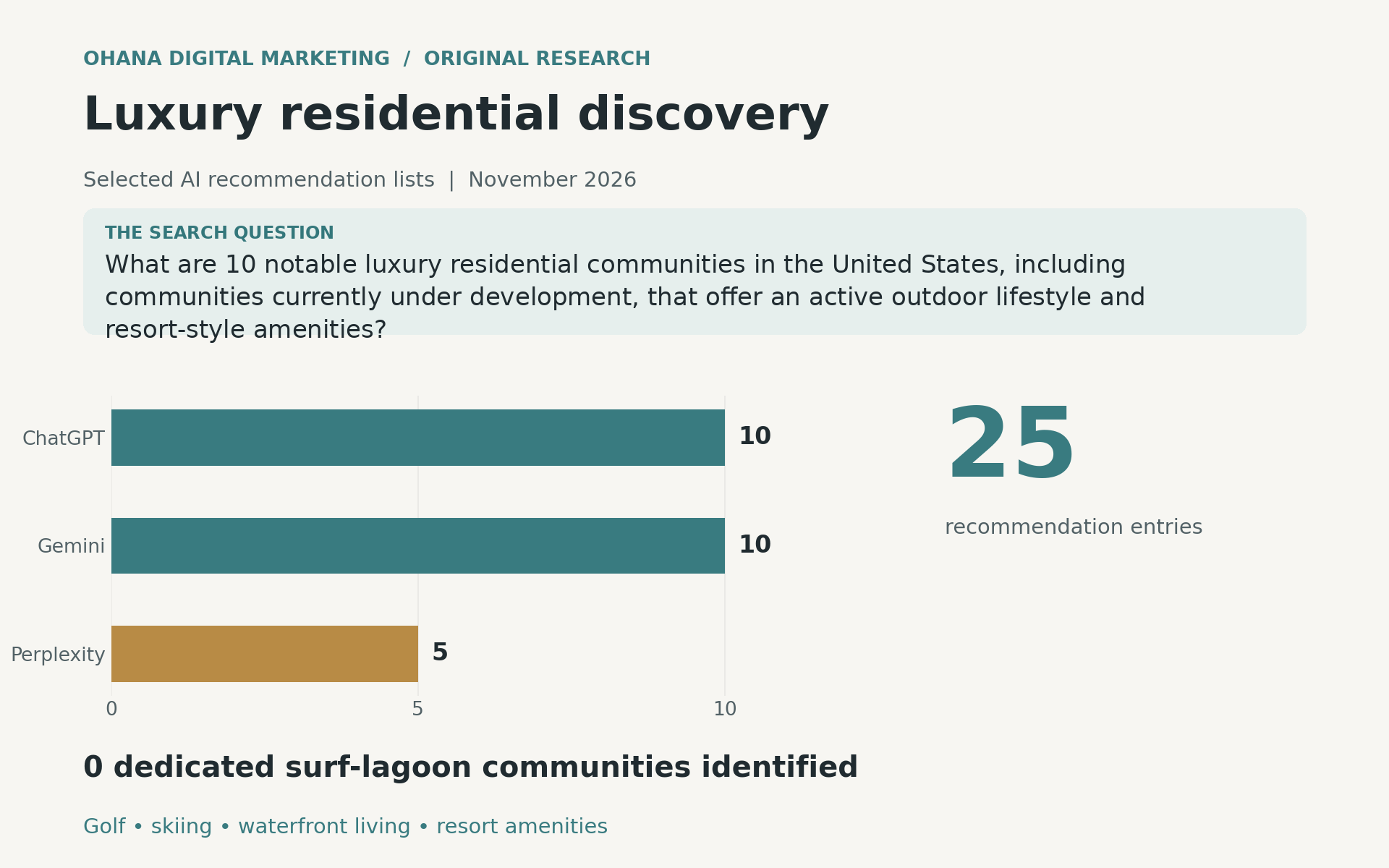
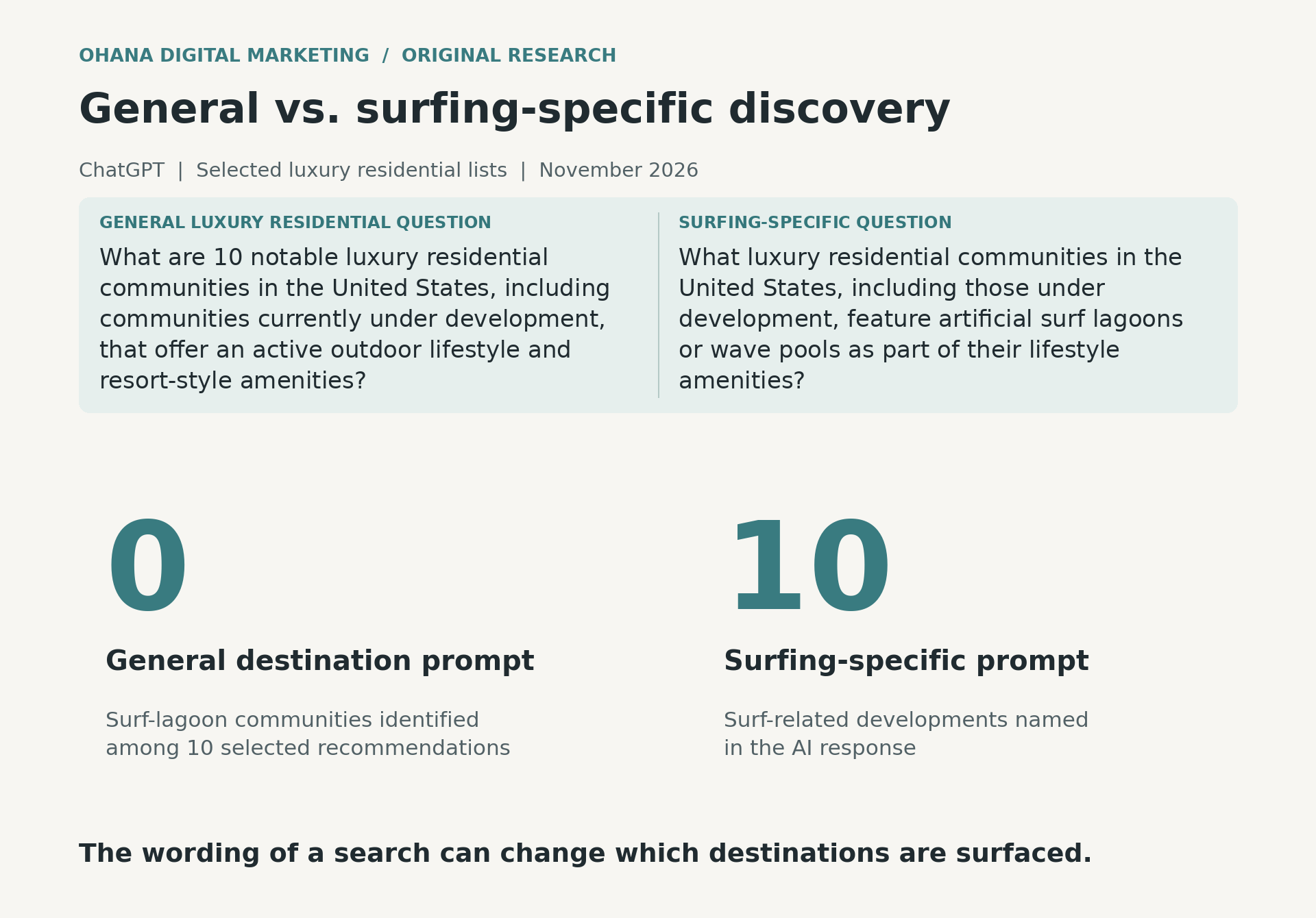
What are 10 notable luxury residential communities in the United States, including communities currently under development, that offer an active outdoor lifestyle and resort-style amenities?
Search Prompt 2: Resort and Hospitality Destinations
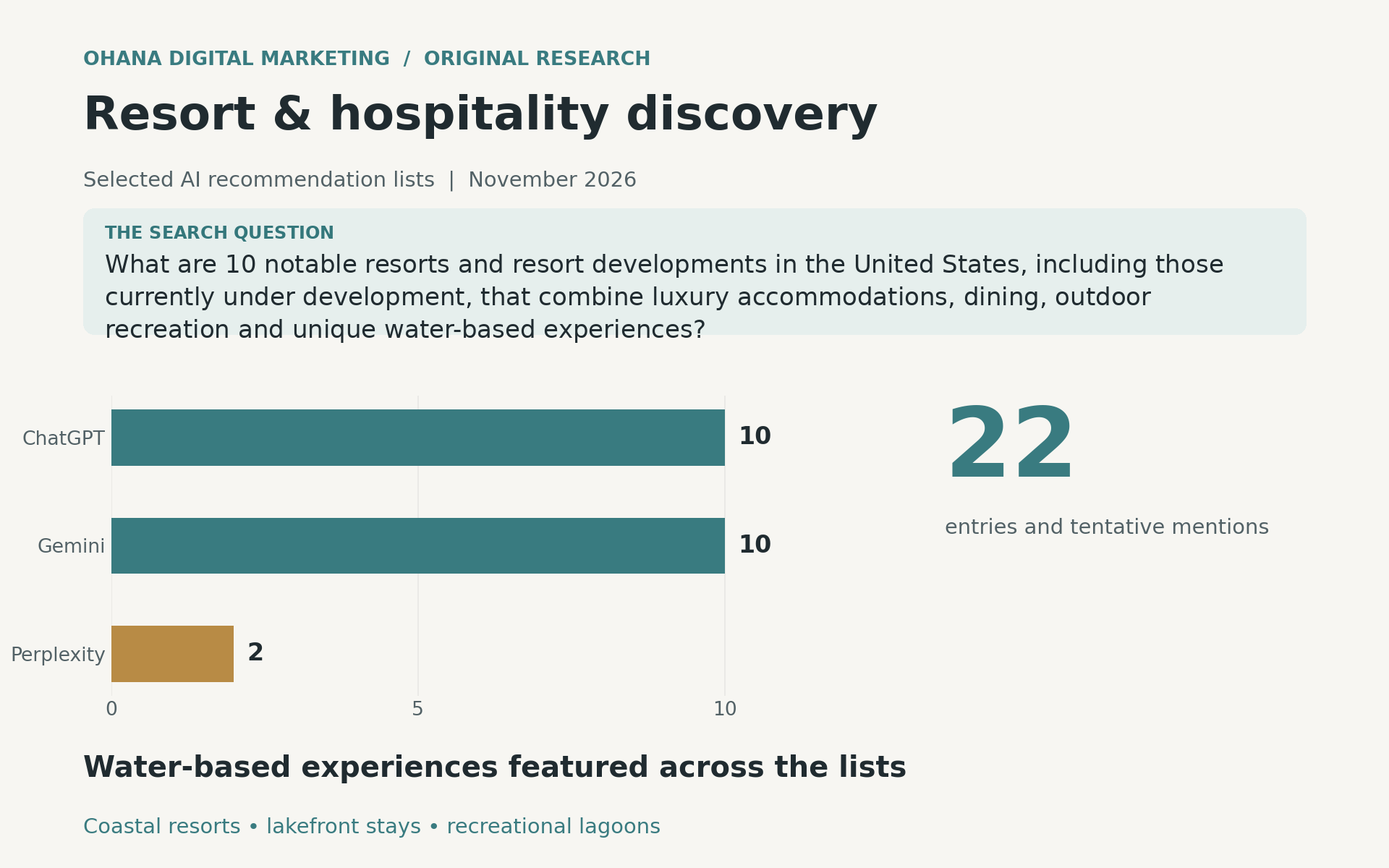
What are 10 notable resorts and resort developments in the United States, including those currently under development, that combine luxury accommodations, dining, outdoor recreation and unique water-based experiences?
Search Prompt 3: Emerging Mixed-Use Destinations
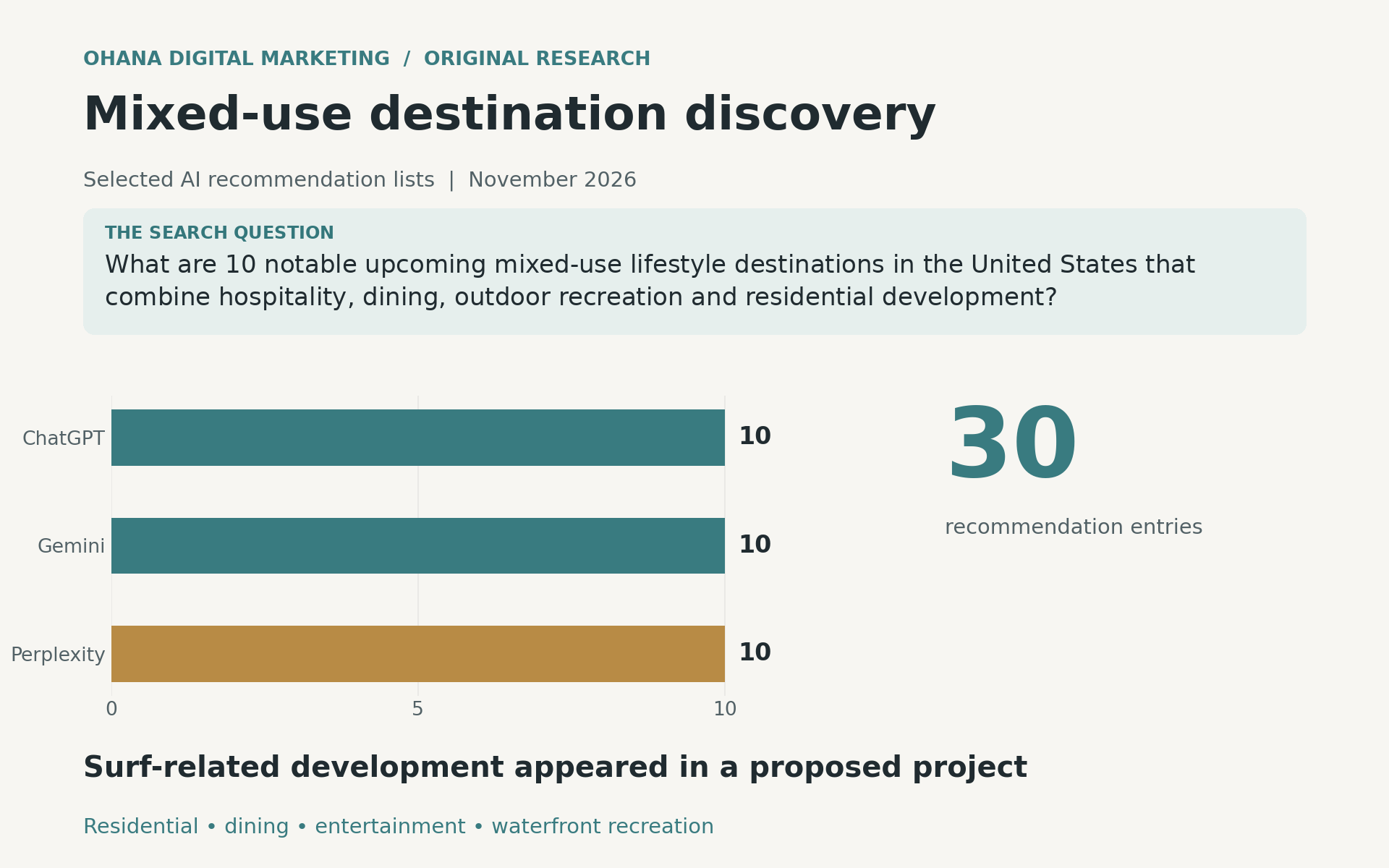
What are 10 notable upcoming mixed-use lifestyle destinations in the United States that combine hospitality, dining, outdoor recreation and residential development?
Search Prompt 4: Family Vacation and Recreation
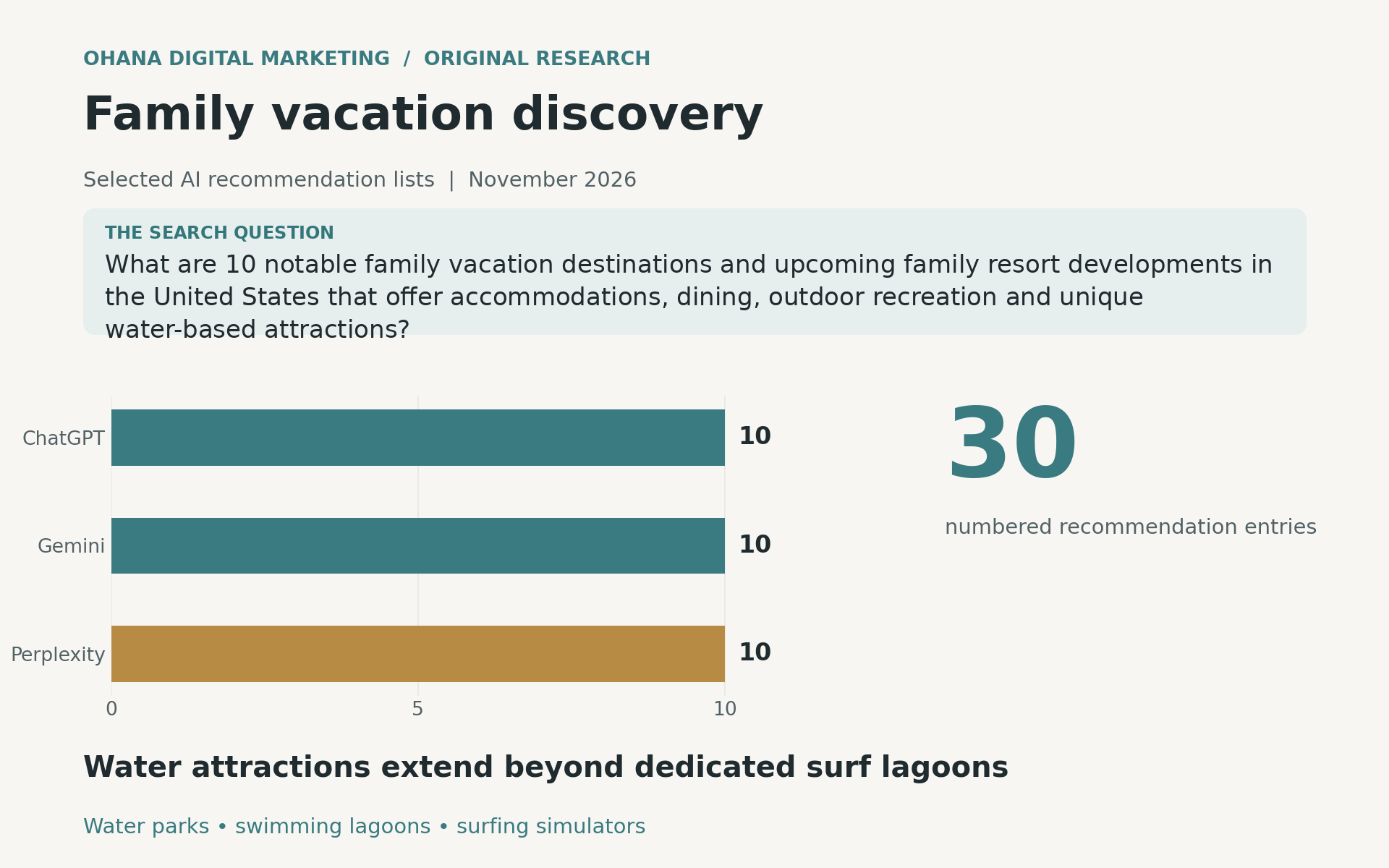
What are 10 notable family vacation destinations and upcoming family resort developments in the United States that offer accommodations, dining, outdoor recreation and unique water-based attractions?
Classification Criteria
For this research, a surf-anchored destination is defined as a development featuring a dedicated artificial surfing lagoon or wave pool as a significant component of its overall destination experience.
Traditional swimming lagoons, recreational water park wave pools, surfing simulators, wake surfing attractions and access to natural ocean surfing were classified separately.
This distinction allows the study to focus specifically on the emerging surf park development model rather than water recreation in general.
3. Research Findings
Luxury Residential Discovery
Across the three AI platforms, the selected general luxury residential lists contained 25 recommendation entries representing 17 distinct communities.
ChatGPT and Gemini each returned 10 communities, while Perplexity identified five.
Eight communities appeared in both the ChatGPT and Gemini responses.
Frequently represented lifestyle amenities included golf, skiing, equestrian recreation, waterfront access and outdoor adventure.
None of the 25 entries in the selected lists identified a community anchored by a dedicated artificial surfing lagoon.
One particularly relevant observation was the inclusion of a developing luxury residential community in California featuring a large recreational swimming lagoon.
This demonstrates that artificial water amenities and developments under construction can appear within broader luxury residential recommendations.
The findings highlight an opportunity for surf-centered residential developments to establish greater visibility alongside other luxury communities built around distinctive recreational experiences.
Resort and Hospitality Discovery
The hospitality searches produced recommendations featuring coastal resorts, mountain retreats, lakefront properties, artificial recreational lagoons and distinctive aquatic experiences.
Established luxury resorts were frequently recognized for their ability to combine accommodations, dining and water-based recreation.
The recommendations also included emerging hospitality developments featuring planned waterfront amenities, recreational lagoons and aquatic attractions.
These findings are particularly relevant to the surf park industry because many emerging surf resorts are being designed around comparable experiences.
A surf-centered resort may offer luxury accommodations, restaurants, wellness facilities, outdoor recreation and a distinctive artificial surfing lagoon, positioning it within the same broader hospitality category as many of the recommended destinations.
Yet dedicated surf-centered developments were not prominently represented across the captured hospitality recommendations.
This highlights an opportunity to strengthen the digital connection between surf resorts and the wider luxury hospitality experiences they provide.
Emerging Mixed-Use Destination Discovery
The selected mixed-use destination lists contained 30 recommendation entries across the three platforms.
The recommendations frequently featured developments incorporating residential properties, hospitality, restaurants, entertainment, parks and waterfront recreation.
Several were identified as projects under construction or in phased development.
Recreational lakes, waterfront districts and artificial swimming lagoons appeared as significant lifestyle attractions within these emerging developments.
These findings are particularly relevant to the surf park industry because the development model increasingly extends beyond individual surfing facilities.
Many surf-centered projects are being designed as integrated destinations that bring together residential living, hospitality, dining, entertainment and outdoor recreation.
The limited representation of dedicated surf-centered developments within these selected recommendations highlights an opportunity to establish stronger visibility within the mixed-use development category.
As surf lagoons become anchors for larger destinations, their digital identity should reflect the full scope of those developments.
Family Vacation and Recreation Discovery
The family recreation searches frequently returned traditional water park resorts, lakefront vacation properties, recreational lagoons and family-oriented hospitality destinations.
Recommendations emphasized accommodations, dining, aquatic attractions and outdoor activities suitable for families.
Several included surfing simulators or conventional water park wave pools as components of the overall guest experience.
The platforms also recognized upcoming family resort developments featuring planned water parks, recreational lagoons and other aquatic amenities.
These observations demonstrate the relevance of distinctive water-based experiences within family vacation discovery.
For surf-centered destinations, this represents an important opportunity.
Artificial surfing facilities can introduce families to surfing in a controlled environment while supporting a wider experience that may include accommodations, restaurants, beginner instruction and outdoor recreation.
Greater visibility within family vacation searches could help these destinations reach audiences beyond experienced surfers and individuals already familiar with surf parks.
4. Surf-Specific Discovery Versus Broader Destination Discovery
To provide an additional comparison, a separate question was submitted to ChatGPT:
What luxury residential communities in the United States, including those under development, feature artificial surf lagoons or wave pools as part of their lifestyle amenities?
The response identified multiple developments associated with surf-related residential amenities.
None of those developments appeared in the selected general luxury residential response from ChatGPT.
This comparison illustrates an important distinction.
A development can be recognized when surfing is explicitly included in a search without necessarily appearing when the question focuses on luxury residential living or resort-style amenities.
This distinction is central to the concept of broader destination discoverability.
The opportunity is not simply to establish visibility among people already searching for surfing.
It is also to become discoverable by audiences whose interests align with the wider destination experience.
5. Documented Examples of the Emerging Destination Model
Existing and emerging surf-centered developments demonstrate how the industry is expanding into residential, hospitality and mixed-use destination categories.
Luxury Residential Development
In Texas, a private residential development (Austin Surf Club, opens in a new tab) is being designed around a large artificial surfing basin, with dining, wellness facilities and outdoor recreation forming part of the community experience.
The developer describes 178 private residences across more than 240 acres, with surfing serving as the community’s defining lifestyle amenity.
In Southern Utah, another luxury residential development (Zion Shores, opens in a new tab) combines artificial surfing facilities with waterfront homes, paddleboarding, private recreational amenities and access to regional outdoor adventures.
These developments illustrate how artificial surfing can function as a residential lifestyle anchor comparable to golf, skiing or waterfront recreation.
Resort and Hospitality Development
In Southern California, a planned surf resort (DSRT Surf, opens in a new tab) combines an artificial surfing lagoon with proposed hotel accommodations, villas, restaurants, wellness facilities and recreational activities.
The development demonstrates how a surf lagoon can form the foundation of a larger hospitality experience rather than operate solely as an individual recreational attraction.
Its planned amenities reflect many of the same characteristics associated with luxury resort destinations, including accommodations, dining, wellness and outdoor recreation.
Integrated Mixed-Use Development
In coastal Virginia, an operating surf-centered district (Atlantic Park, opens in a new tab) combines an artificial surfing lagoon with residential apartments, restaurants, retail, live entertainment and boutique accommodations (The Sitio, opens in a new tab).
The development offers surfing experiences for different skill levels alongside a wider hospitality and entertainment environment.
This example demonstrates that the surf-anchored destination model is not limited to proposed developments. It is already being implemented within operating mixed-use districts.
Together, these examples illustrate the expanding role of surf parks within established destination categories and the importance of communicating their complete offerings across the digital landscape.
Sources: official development websites, linked in the text above (opens in a new tab).
6. The Broader Destination Discovery Opportunity
As surf parks become more integrated with hospitality, real estate and recreation, their potential audiences expand.
A residential buyer may prioritize outdoor living, wellness and family experiences.
A resort guest may prioritize accommodations, dining and distinctive recreation.
A family traveler may be looking for an experience that offers activities for different ages and skill levels.
An investor may be researching emerging mixed-use developments and new recreational business models.
These audiences may never begin their search with the words surf park.
If digital visibility is concentrated primarily around surfing-specific terminology, opportunities to connect with broader audiences may be limited.
The findings from this research highlight the importance of representing surf-centered developments across the full range of industries they serve.
This includes communicating the relationship between surfing, hospitality, residential living, dining, entertainment and recreation through clear, accessible and well-structured online information.
The opportunity is to establish surf-centered destinations as relevant participants in broader discovery experiences, not simply as facilities offering artificial waves.
7. Implications for the Surf Park Industry
Establishing a Broader Destination Identity
The digital identity of a surf-centered development should reflect its complete business model.
A surf lagoon may be the defining attraction, but the wider destination may also serve hospitality, real estate, wellness, dining and family recreation audiences.
Clearly communicating these relationships can help search platforms understand the different experiences available within a development.
As the industry evolves, the terminology used to describe these destinations becomes increasingly important.
A development that combines luxury accommodations, residential living, restaurants and recreation should have a digital presence that reflects those offerings alongside its surfing experience.
Building the Digital Foundation Before Opening
For developments still under construction, the preopening period provides an opportunity to establish a clear and consistent digital presence.
Publishing accurate information about planned amenities, development phases, accommodations and recreational offerings can help establish the project’s identity before operations begin.
Ideally, this foundation begins well before opening, allowing search platforms time to discover and understand the development as its identity evolves.
For operating destinations, the same opportunity exists through ongoing improvements to how their complete experiences are represented online.
It is never too late to strengthen that foundation.
Supporting Industry-Wide Understanding
The surf park industry is developing a destination model that intersects with several established industries.
As more projects emerge, consistent terminology, accessible development information and credible industry coverage may help establish surf-centered destinations as recognizable participants within those broader categories.
The objective is not to replace surfing as the industry’s identity.
It is to ensure that the wave is understood as the foundation of a larger destination experience where appropriate.
Conclusion
Surf parks are increasingly becoming the anchors of destinations that extend well beyond the wave.
The findings from this exploratory research demonstrate that AI-powered search platforms recognize many of the individual experiences associated with these developments, including luxury accommodations, recreational lagoons, waterfront living and outdoor recreation.
The opportunity for the surf park industry is to establish stronger visibility across the broader destination categories these developments increasingly serve.
As the industry continues to evolve, building a digital foundation that reflects the complete destination experience becomes an important part of connecting with future residents, guests, families and visitors.
The future of surf park discoverability is not simply about being found by people searching for a wave.
It is also about being recognized by people searching for the lifestyle, community and experiences that the wave helps create.