
Surf community buyers search for the lifestyle first because they are choosing a way of living before they choose a house. Their searches start with waves, surf parks, and coastal culture, then move through places to stay and things to do, and only reach homes and lots near the end of the journey.
That pattern matters if you are developing or marketing a residential surf community. If your website only speaks to the final, listing-ready stage, you miss the months of research where buyers form opinions, build familiarity, and decide which communities deserve a closer look.
How Do Surf Community Buyers Search Differently From Typical Home Buyers?
A typical home buyer starts with a market, a budget, and a bedroom count. Surf community buyers often start somewhere else entirely: with a question about where they can surf consistently, or what it would feel like to live near a wave pool. The property is the last piece, not the first.
That shifts where the real competition happens. Listing-focused SEO captures people who already know exactly what they want. Lifestyle-first search captures them earlier, when they are typing phrases like “surf lifestyle real estate” or “California surf community homes” and have not committed to a market yet. That audience is wider, it carries real intent, and few developments are publishing for it yet.
What Is the SURF → STAY → EXPERIENCE → LIVE Journey?
The most useful way to understand surf community buyers is to treat their search behavior as a progression with four stages. Each stage has its own questions, its own keywords, and its own content needs.
1. SURF
Prospects research waves, breaks, and surf parks in general terms. They want to know where the good surf is, how wave pool technology works, and which destinations are worth a trip.
2. STAY
Prospects compare places to stay near surf destinations, such as resorts, short-term rentals, and lodging inside or next to a surf park. This is often the first time they visit in person.
3. EXPERIENCE
Prospects ask about amenities, events, coaching programs, and community life. They are picturing a routine, not just a weekend.
4. LIVE
Prospects search for homes, lots, or investment properties inside a surf community. This is the stage most developer websites are built for, and often the only one they cover.
What Do Searches Look Like at Each Stage?
Each stage produces different phrasing. Here is a rough picture of how queries shift as a buyer moves through the journey:
- SURF: “best surf parks in the US,” “how do wave pools work,” “surf breaks near [region]”
- STAY: “surf resort with lessons,” “rentals near [surf park name],” “surf weekend getaway”
- EXPERIENCE: “what amenities do surf park communities offer,” “surf club membership,” “surf coaching for adults”
- LIVE: “surf community homes in California,” “homes near a wave pool,” “California surf lifestyle properties”
Notice that the early searches never mention real estate. A buyer who spent months reading about a specific surf park, staying nearby, and learning about its coaching programs already knows your name by the time they search for homes. That familiarity is the payoff of showing up early.
One complication: surf park search terminology is still emerging. Phrases like “surf community,” “wave pool neighborhood,” and “surf residential” are used inconsistently, and the language will keep shifting as the industry matures. Any keyword list built around these stages needs regular review rather than a one-time setup.
Why Does Lifestyle Content Outperform Property Features?
Lifestyle content answers the questions buyers are actually asking at the stages where most developments are silent. Content about surf club access, on-site coaching, or proximity to a known break meets a real question at a real moment in the buyer journey. A list of square footage and finishes does not.
This is the core of amenity-driven real estate marketing. The amenities are not a bullet list at the bottom of a listing. They are the reason the buyer started searching in the first place. Content that shows what a morning session looks like, or how residents gather for events, gives buyers something to connect with long before they are ready to talk to sales.
It also needs to feel genuine. Stock-photo beach imagery and generic “coastal living” copy read as borrowed. Buyers who care about surf culture notice when a brand is performing it rather than living it.
What Does This Mean for a Developer’s Website?
If your buyers move through four stages, your website should offer something useful at each one. Here is a practical way to audit your site:
- Map existing pages to stages. Tag every page and blog post as SURF, STAY, EXPERIENCE, or LIVE. Most developments find that nearly everything sits in LIVE.
- Fill the earliest gaps first. Add content that answers SURF and EXPERIENCE questions, such as how the wave technology works, what the surf program includes, and what daily life in the community looks like.
- Connect the stages with internal links. An article about wave pool sessions should lead naturally to lodging, then amenities, then available homes. A site structure built around visitor intent makes those paths obvious.
- Write answers that can be quoted. AI Overviews and answer engines pull short, specific answers. Question-based headings followed by direct responses help your content earn citations.
- Review search data regularly. Use Google Search Console to see which terms bring visitors and to catch new vocabulary as it appears.
This kind of stage mapping is the foundation of marketing a surf community as a full lifestyle destination, where search, content, and listings all work together. Once the structure is in place, the next question is what to publish, and a list of content ideas for the pre-sale window is a good place to start filling each stage.
Example: Building Demand Before the First Home Was Finished
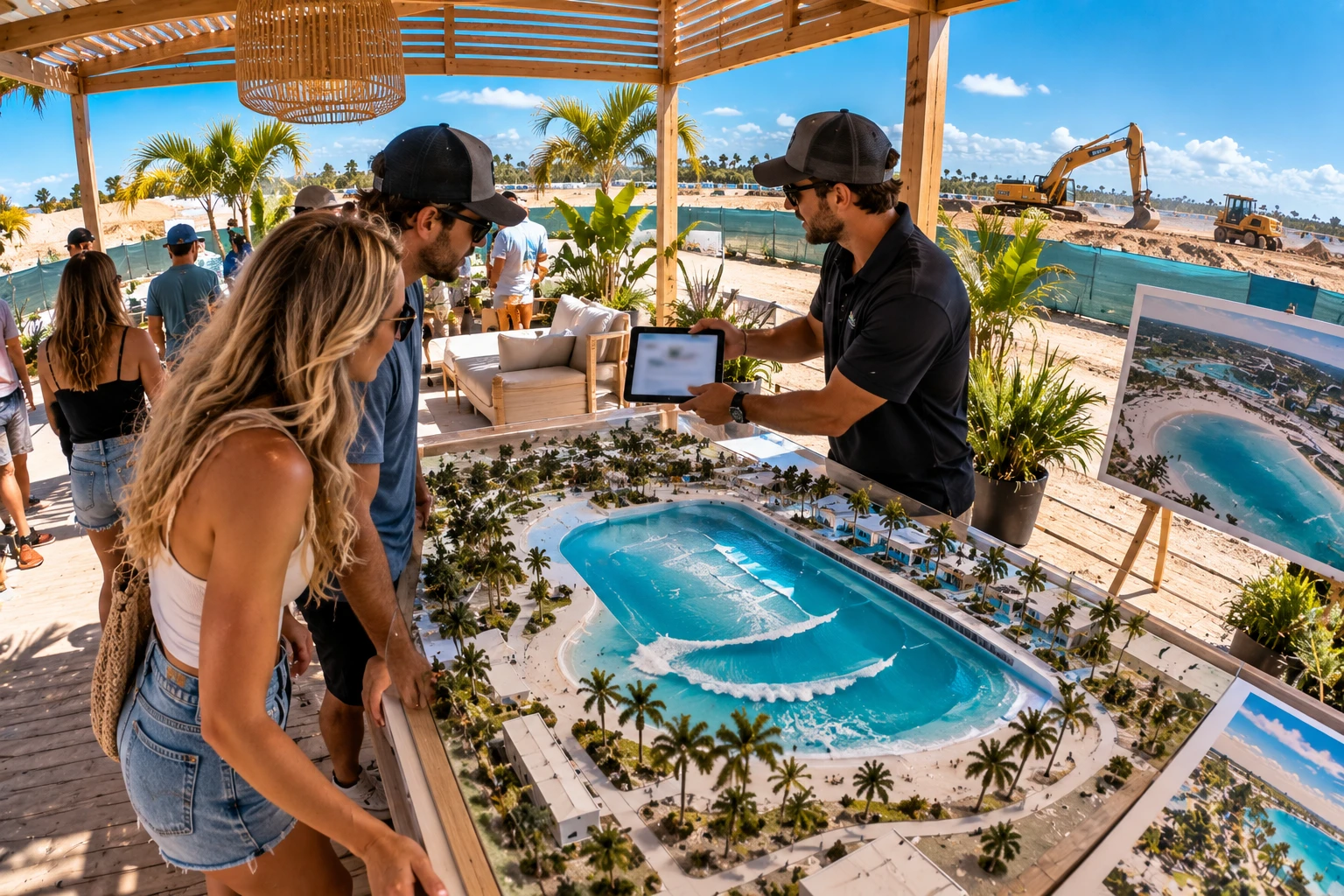
A Southern California surf resort development partnered with Ohana while it was still under construction. With no physical foot traffic to drive awareness, the strategy focused on lifestyle-stage searches like “surf community homes in California” and “California surf lifestyle properties,” paired with content that conveyed what living in the community would feel like before the first home was complete.
Site visits from those high-intent lifestyle queries rose 30% within a few months of launch, and that traffic turned into real inquiries from buyers and vacationers considering the area as a permanent home. The work was coordinated with the developer’s in-house marketing team so every piece matched the existing brand direction.
Results like this show what is possible, not what is guaranteed. Search and AI-answer visibility build over time and depend on your content assets, team coordination, and the competition in your location.
Frequently Asked Questions
When should a surf community start publishing lifestyle content?
As early as possible, ideally while the project is still in construction or pre-sale. Search visibility takes time to build, so content published early is already earning traffic when buyers are ready to act.
Does lifestyle content replace listing pages?
No. Listing and availability pages still serve buyers at the LIVE stage. Lifestyle content works alongside them, bringing in prospects earlier and guiding them toward those pages when they are ready.
Can a small in-house marketing team handle this?
Often, yes, especially with a clear stage map and a realistic publishing schedule. Many teams handle brand and sales content themselves and bring in a search specialist for keyword research, content structure, and AI search formatting.
Key Takeaways
- Surf community buyers usually choose the lifestyle before they choose the property.
- Their searches move through four stages: SURF → STAY → EXPERIENCE → LIVE.
- Most developer websites only cover the LIVE stage, which leaves early research uncontested.
- Genuine amenity and lifestyle content builds familiarity months before a buyer contacts sales.
- Keyword targets need regular review as new search vocabulary appears.
If you want a second set of eyes on how your community shows up across the full buyer journey, Ohana works alongside developers and in-house teams on search strategy for surf destinations and communities. You can also reach out to talk through where your site stands today.