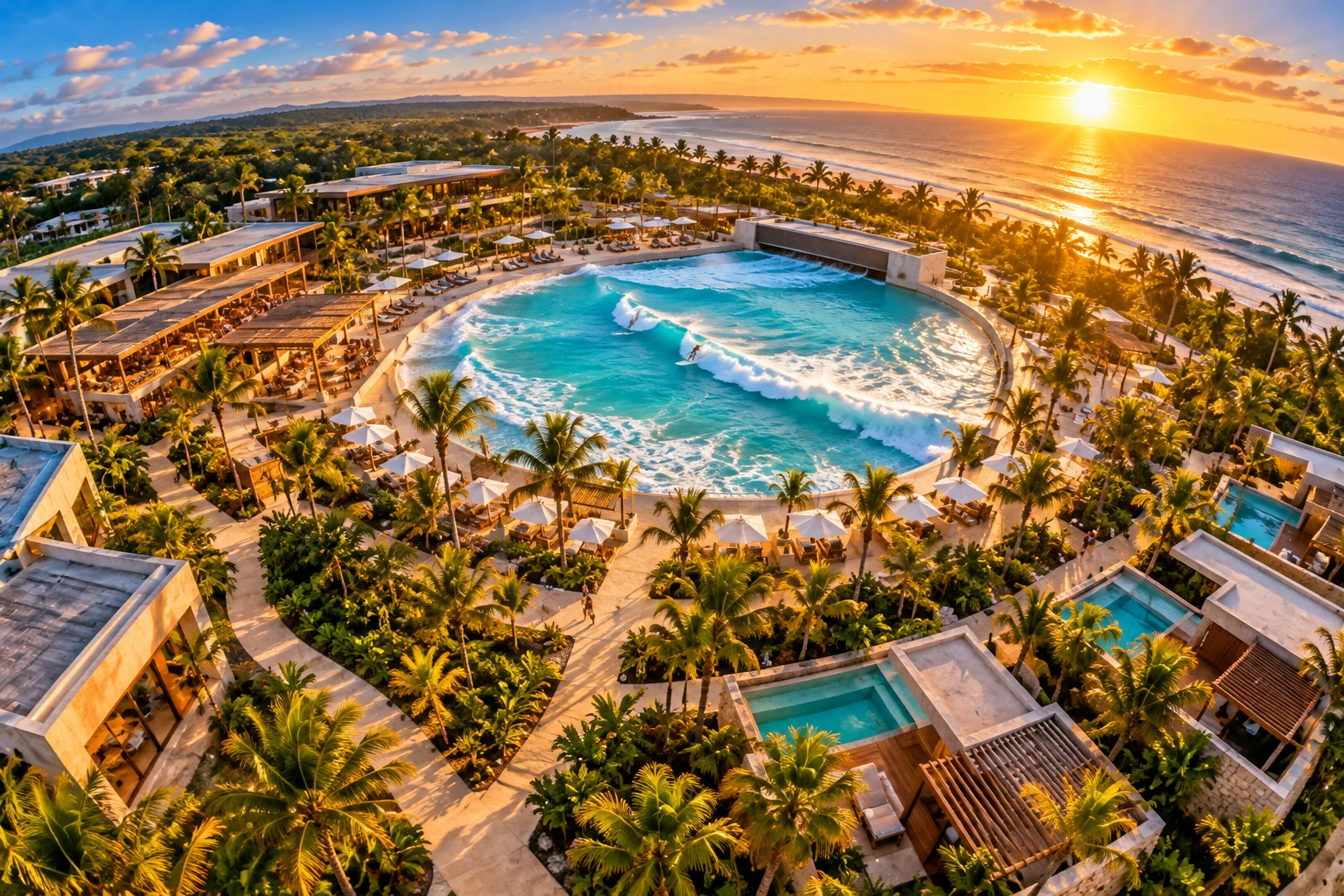
To market a surf resort as one connected destination, build a single brand story that links the waves, the lodging, the dining, the events, and the residences, then repeat that story consistently on your website, in search results, on your listings, and across social. Strong surf resort branding means every audience sees a different door into the same place.
A surf resort is not a hotel with a wave pool. It is a lifestyle destination with several products under one roof, and each one attracts a different kind of guest. This guide covers how to map the guest journey, how to segment your audiences without splitting your brand, and how to keep every channel telling the same story.
Why Does Surf Resort Branding Need One Unified Story?
Without a unified story, each audience segment gets a separate, disconnected message. The surf school page sounds like one business, the hotel page sounds like another, and the residential pages sound like a third. Search engines and guests both struggle to understand what the resort actually is.
The cost is real. A fractured presence makes it harder to rank for anything meaningful and harder to convert the visitors you do get. A guest who sees one message on your website and a different one on your Google listing starts to lose trust before they ever book.
A connected brand fixes that by giving every amenity a shared identity and promise.
What Does the Surf Resort Guest Journey Look Like?
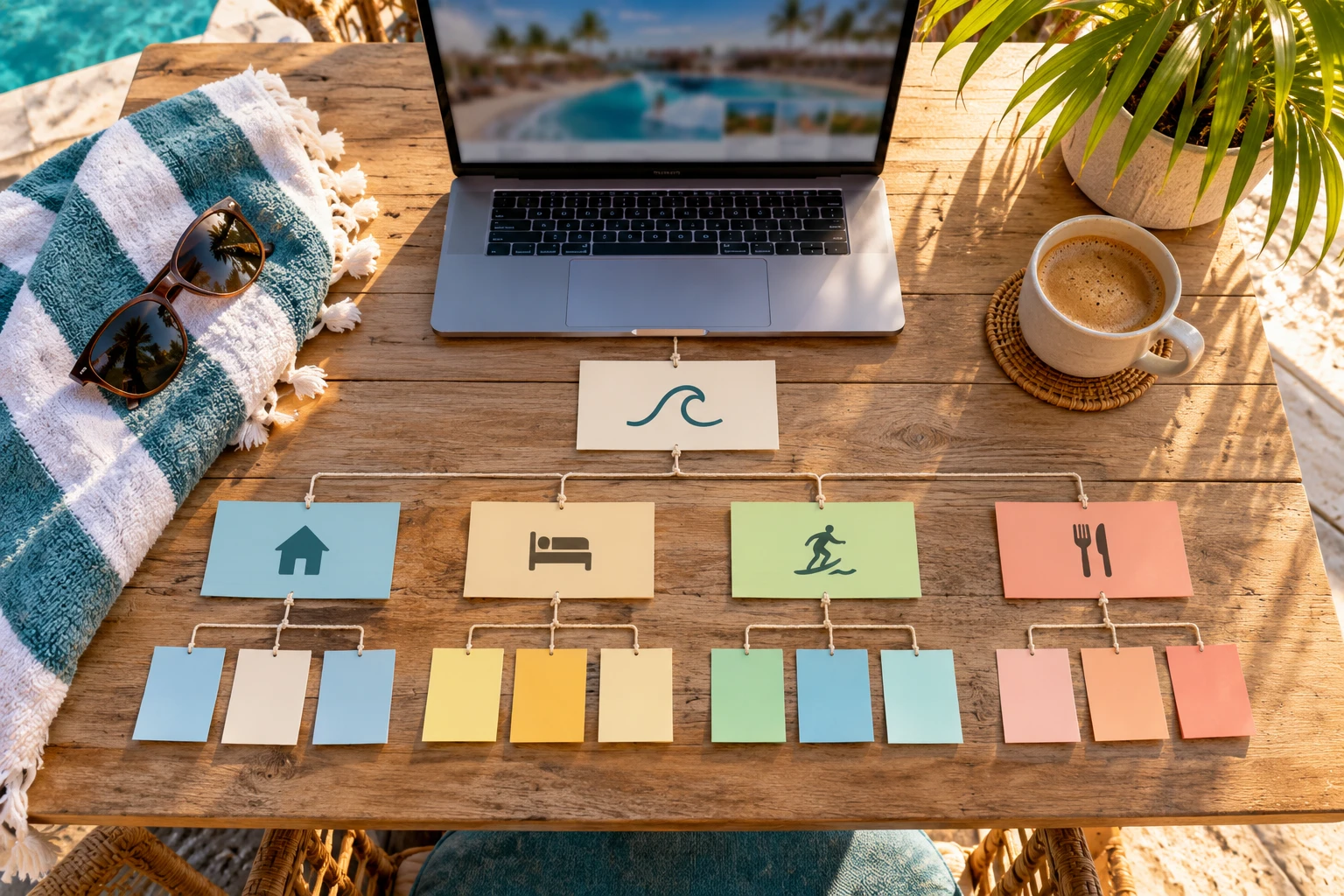
A useful way to think about the journey is the progression SURF → STAY → EXPERIENCE → LIVE. People often enter through one stage and move to the next as their interest grows.
- Surf: A first-time surfer searches for something like “beginner surf vacations.” They need inspiration and safety reassurance.
- Stay: A family compares lodging and amenity packages. They want to know what is included and whether there is something for everyone.
- Experience: A returning guest looks for what is new: events, dining, packages, or programs they have not tried yet.
- Live: A prospective buyer researches resort residences or fractional ownership. They want to understand the lifestyle as an investment.
Each stage needs its own message and its own content, but the brand voice, visuals, and core promise should stay the same throughout.
How Should You Segment Audiences Without Splitting the Brand?
Start by identifying the three or four audience segments that matter most to your resort. For most multi-amenity surf resorts, that list includes surfers, vacationing families, group or event planners, and property buyers or investors.
Then build a separate content pathway for each one. A family planning a week-long trip searches differently than a surf coach booking a training camp or a buyer researching fractional ownership. Each pathway needs:
- Its own entry point, such as a landing page or section that matches what that audience searches for
- Its own trust signals, like safety information for beginners or community details for buyers
- Its own call to action, whether that is booking a lesson, reserving a room, or requesting residence information
The key is that the pathways diverge in content but not in identity. Same name, same tone, same visual language, same promise. Group and event audiences in particular deserve their own pathway, and there is more on that in our post on filling shoulder seasons with retreats and group events.
What Is Integrated Resort Marketing in Practice?
Integrated resort marketing coordinates your website, search content, Google Business Profile, and answer engine optimization so every channel reinforces the same story. Social media and email can amplify that story, but the foundation lives on your own website and in your search presence.
Audit the website against the journey
Map every existing page to the surf, stay, experience, and live stages to find the gaps. Our guide to organizing resort pages by guest search intent walks through that page hierarchy in detail.
Fill the content gaps
Create pages that answer the specific questions each audience is already searching. A beginner wants to know what a first lesson looks like. A buyer wants to know what daily life in the community feels like.
Align your listings
Make sure your Google Business Profile and other listings describe the resort the same way your website does. Local map visibility drives a meaningful share of resort discovery, so mismatched names, categories, or descriptions undercut everything else.
Structure content for AI answers
AI-powered search tools increasingly pull direct answers from resort pages. Clear question-based headings and direct answers make your content easier to cite. This is a newer area of search, so build for it now and expect it to keep changing.
How Does Brand Positioning Show Up Across Touchpoints?
In surf resort branding, positioning is not just a tagline. It is the sum of every page title, image caption, FAQ answer, and review response. A resort positioned as a premium family surf destination needs that signal to appear consistently in all of those places, not only on the homepage.
Run a simple consistency check across your touchpoints:
- Do your page titles and meta descriptions describe the same kind of destination?
- Do your photos and captions show the full experience, not just the waves?
- Do your review responses reflect the same tone and promise as your website?
- Do your social profiles link back to the right pathway for each audience?
One caveat: surf industry search terminology is still emerging. The phrases people use for surf parks, wave pools, and surf communities are shifting, so keep your keyword targets flexible and revisit them as the language settles.
Example: Bringing an Immersive Property Online
A mid-sized surf resort that partnered with Ohana struggled to connect its online presence with its on-site guest experience. The property itself was genuinely immersive, but the brand felt flat online.
The fix had two parts. First, the resort’s web content was updated to include 360-degree video of surf conditions and amenities, so the online experience felt closer to the real one. Second, search efforts expanded beyond surf-specific keywords to include family travel terms. The result was a noticeable increase in web inquiries from groups looking for destinations that offer both surf excitement and family-friendly experiences.
Results like that take time, and rankings or AI answer placement are never guaranteed.
Frequently Asked Questions
How long does it take for a connected brand to show results in search?
Search visibility builds over time rather than overnight. How quickly you see movement depends on your existing content, how much needs to change, and how consistently your team publishes. Be wary of anyone who promises specific rankings in a fixed timeframe.
How do you keep one brand voice when departments publish separately?
Give every department the same short brand guide covering tone, naming, and the core promise. Then route new pages, posts, and listing updates through one review step before they go live, so small differences get caught early.
Who should own brand consistency at a multi-amenity resort?
Ideally one person or team reviews messaging across every department before it goes live. Lodging, food and beverage, surf programs, and sales often publish independently, which is how mixed messages creep in. A shared brand guide and a single approval step prevent most of the drift.
Key Takeaways
- Treat waves, lodging, dining, events, and residences as chapters of one brand story.
- Map content to the SURF → STAY → EXPERIENCE → LIVE journey so each stage has a clear message.
- Give each audience its own pathway while keeping the name, tone, and visuals identical.
- Align your website, Google Business Profile, and social profiles so they describe the resort the same way.
- Keep keyword targets flexible and revisit them on a regular schedule.
If you want help with surf resort branding that ties every part of your property into one story, see how Ohana approaches marketing surf parks and resorts as full destinations. You can also reach out to the team with questions about your resort.