Surf park developers spend years planning land, wave technology, financing and construction. The digital foundation, meaning how search engines and AI tools understand the whole destination, deserves the same early planning, because that’s how surfers, families, homebuyers and investors will find what’s being built.
A bigger vision is taking shape
The surf park industry has grown into a billion-dollar category. Bisnow reported in July 2026 that the industry was valued at $4 billion, according to trade association Surf Park Central, with the number of parks developed since 2015 expected to roughly double to 50. Wavegarden alone reported 12 operating facilities, 23 projects in advanced development and more than 50 committed developments worldwide as of April 2026.
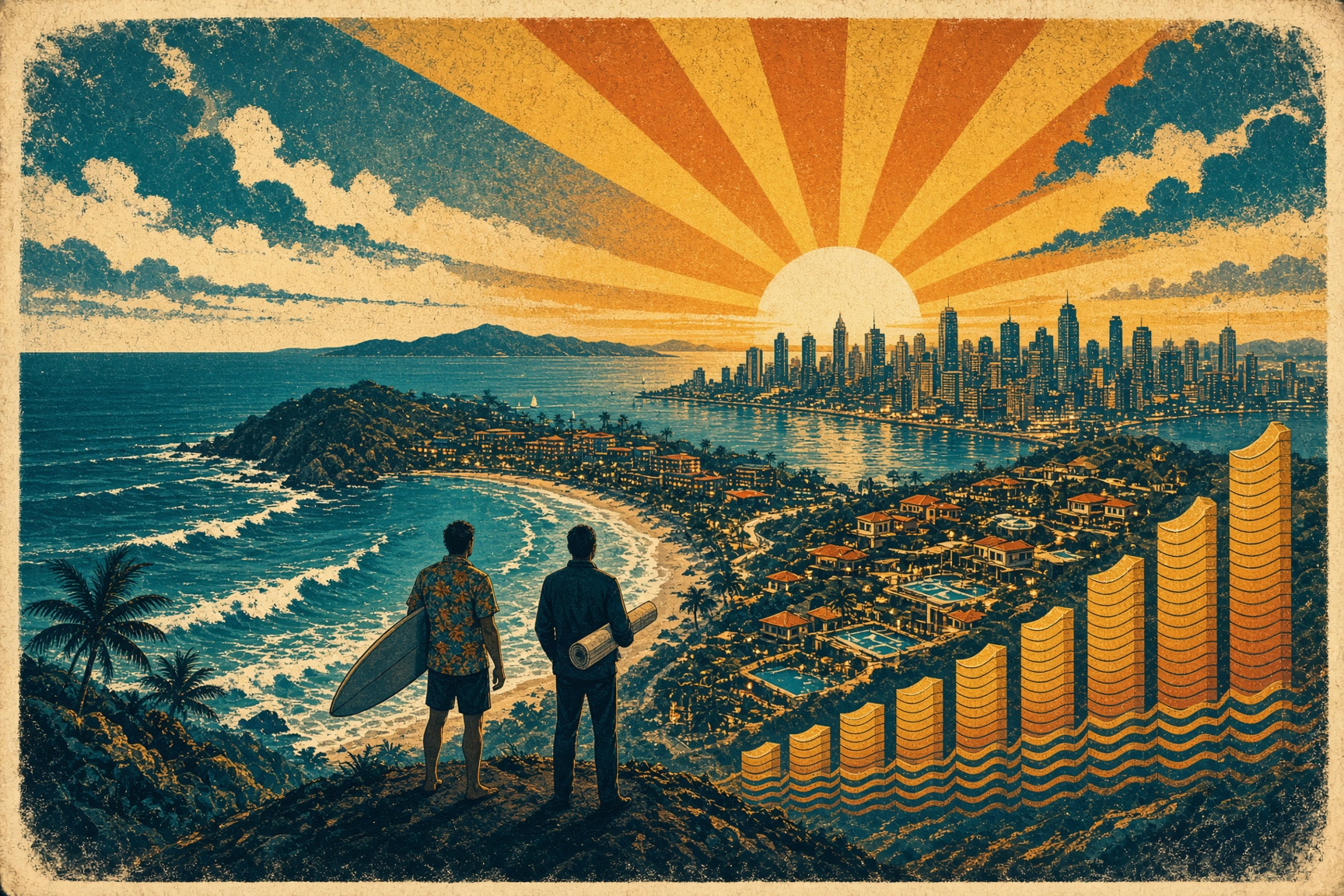
Developers are no longer asking only how to create the perfect wave. They’re asking what can be built around it: master-planned communities, resorts, hospitality, entertainment and lifestyle districts.
That shift raises one question this series keeps coming back to. Is the digital foundation growing along with the development?
The wave is the anchor. The destination is the opportunity.
Golf courses, marinas and ski resorts have defined residential and resort communities for decades. Surf lagoons now join that list. Waco Surf is building an 88-home residential community on 450 acres next to its resort, and Cabo Real Surf Club in Los Cabos has reported more than $200 million in home sales around a four-acre surf lagoon.
The wave becomes the anchor, and the surrounding destination creates reasons to visit, stay, return and invest. Read more: More Than a Wave Pool: How Surf Parks Are Redefining Destination Real Estate
One destination, many audiences
The people discovering a surf-anchored development aren’t all looking for the same thing:
- A surfer researches wave quality and session availability.
- A family looks for a unique vacation.
- A homebuyer compares amenity-rich communities.
- A corporate group looks for a memorable retreat.
- An investor evaluates the overall development.
Each one takes a different path into the same destination. Without a connected digital strategy, those paths stay fragmented. Read more: Beyond the Wave: Why Surf Parks Are Becoming Mixed-Use Destinations and How to Market a Surf Resort as One Connected Destination
The missing layer between development and discovery
Land acquisition, entitlements, engineering, wave technology, financing, construction, hospitality planning and operations all take careful coordination. Hotel & Leisure Advisors puts a single surf park at roughly $40 million to more than $350 million.
Marketing is usually part of the plan. But marketing and digital search infrastructure aren’t the same thing:
| Marketing campaign | Digital search foundation |
|---|---|
| Creates awareness and excitement | Helps people find, understand and explore the destination |
| Active while the campaign runs | Keeps working and compounds over time |
| Ads, social posts, launch events | Site architecture, experience pages, answers, structured data, consistent facts |
| People the campaign targets | People actively searching, including those who never saw the campaign |
A surf-anchored development needs more than a homepage announcing an opening date. It needs a connected architecture that shows how surfing, hospitality, residences, dining, entertainment and the wider community fit together.
Why waiting until opening is a missed opportunity
A surf park can take years to go from concept to opening, and timelines often shift along the way. Interest builds the whole time through announcements, approvals, news coverage and construction updates. A pre-opening SEO and AEO strategy can organize that interest around accurate, official information, without promoting amenities before they’re confirmed. Read more: How Long Does It Take to Build a Surf Park? and How to Build Surf Park SEO Visibility Before Opening Day
AI search is expanding the conversation
People increasingly describe the experience they want instead of naming a place:
- “Where can I take my family on vacation where one person can surf and everyone else has things to do?”
- “What residential communities have unique outdoor amenities?”
- “Are there resorts with artificial surf lagoons?”
- “Where can beginners learn to surf in a controlled environment?”
One surf-anchored destination could be the right answer to all four. But if it’s presented online only as a wave pool, AI tools have no way to connect it to the other three. There are no guaranteed placements in AI answers, but clear architecture, accurate information and consistent descriptions make a destination much easier to cite. Read more: The Next Search Frontier: How AI Is Changing the Way People Discover Surf Parks and What AEO Means for Surf Parks and Destination Resorts
A digital foundation that grows with the development
A project might launch with a concept site and development news, then add residences, resort rooms, dining, memberships, events and more recreation. Each phase brings new audiences and new searches. Instead of rebuilding the site every phase, developers can set up a flexible structure early: how experiences connect, how each offering is represented, and how the destination keeps one recognizable identity.
The goal isn’t to replace the marketing team. It’s to give marketing, development and operations a stronger foundation to build on.
The industry opportunity is bigger than any one park
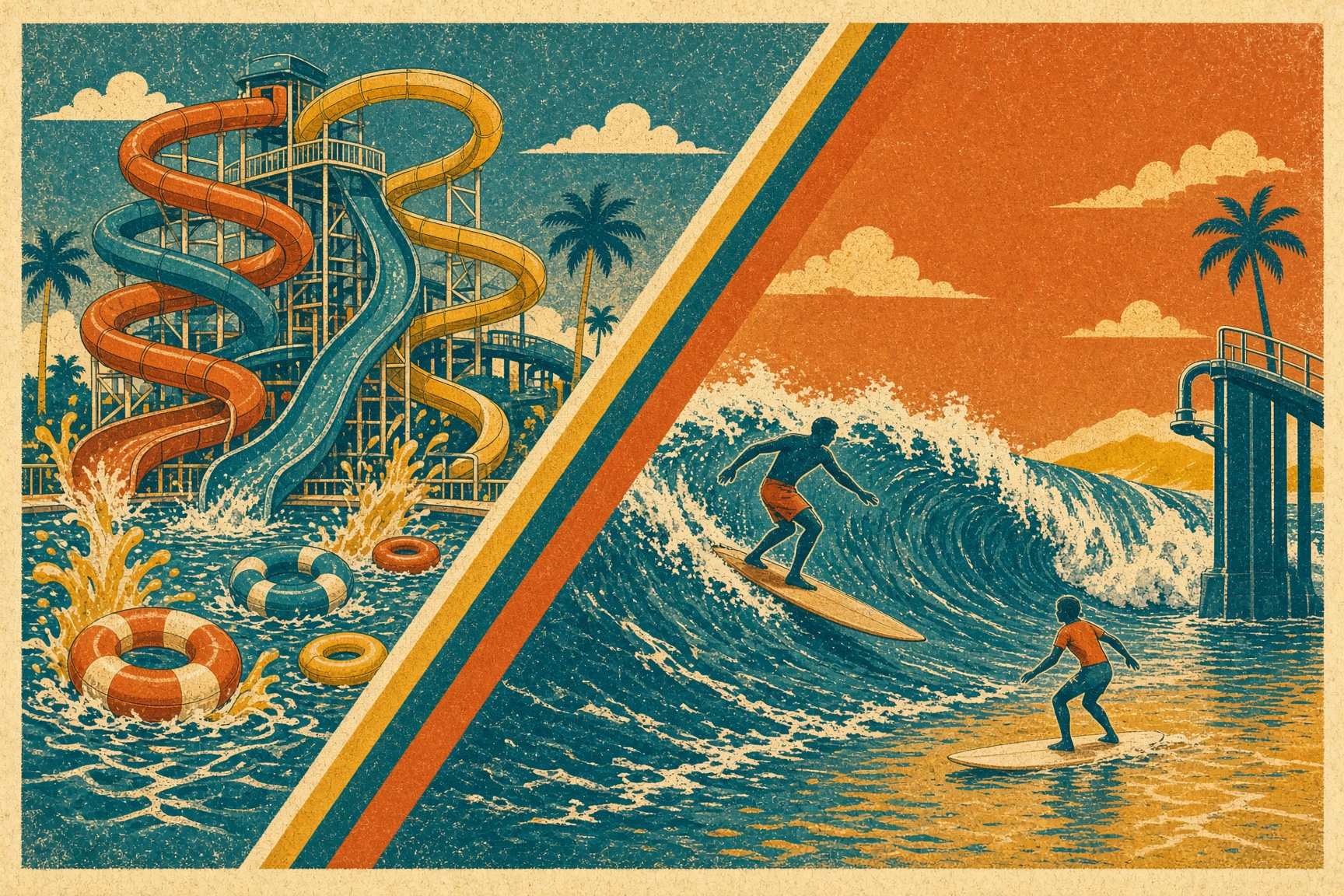
A surf park can be a recreation venue, part of a resort, a residential amenity, a training center or a mixed-use anchor. Those models aren’t the same and shouldn’t be marketed as if they were. Still, the whole industry benefits when the public understands what surf parks are. Read more: What Is a Surf Park? How Surf Parks Differ From Water Parks
At Ohana Digital Marketing, this is the vision behind our work. We specialize in SEO and AI search visibility for surf parks and the destinations being built around them. Our interest goes beyond individual rankings: we believe this industry can build a stronger digital identity as a new category of destination, and that the work should start alongside the physical development, not after construction ends.
The bigger picture
The most exciting part of the surf park industry may not be the wave technology itself, but what it makes possible: new destinations, new places to live, new hospitality and recreation, and new ways for people to connect with surfing. Developers are already imagining all of this at remarkable scale. The next challenge is making sure the digital world can understand and find what they’re building. When the vision extends beyond the wave, the strategy for being discovered has to extend beyond it too.
Frequently asked questions
Why do surf park developers need more than a marketing strategy?
Marketing creates awareness while a campaign runs. A digital search foundation helps people find and understand the whole destination whenever they search, and it keeps working as each phase opens.
When should a surf park development start working on SEO and AEO?
At the public announcement, once confirmed details can be shared. Starting early gives the official site time to become the trusted source before opening.
How big is the surf park industry?
Bisnow, citing trade association Surf Park Central, reported the industry was valued at $4 billion, with the number of parks developed since 2015 expected to roughly double to 50.
Beyond the Wave is an educational editorial series by Ohana Digital Marketing exploring surf park development, destination identity, SEO, AEO and the future of digital discovery.
Developing a surf park or surf-anchored destination? Ohana Digital Marketing builds the search and AI visibility foundation alongside your development. See how we help surf parks or start a conversation.