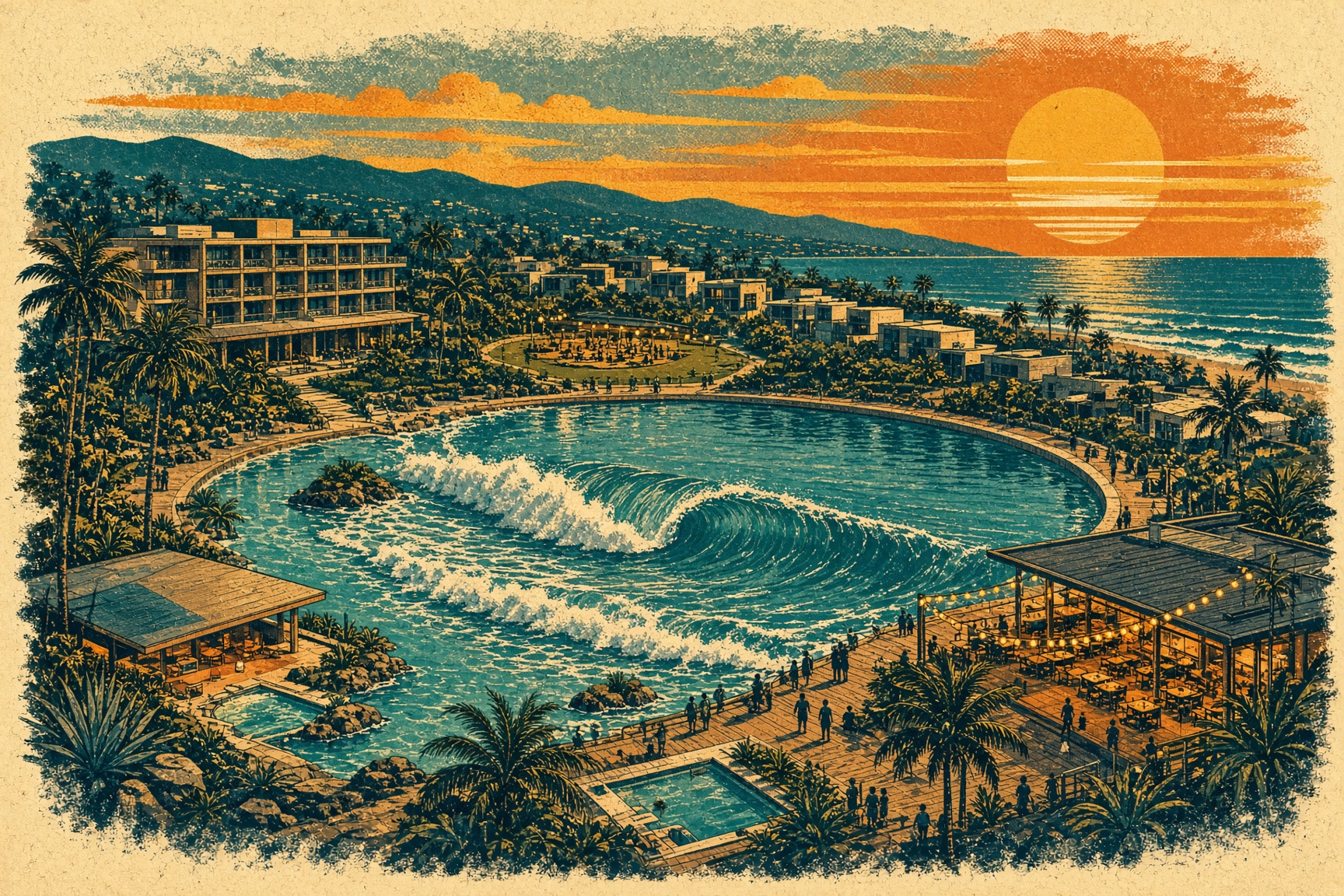
Surf parks are becoming mixed-use destinations because the wave alone can only serve so many people at once. Developers now surround the lagoon with lodging, dining, wellness, events and homes, which gives visitors more reasons to come, stay longer and spend more.
The first generation of surf parks was mostly about proving the wave could work. The next generation is about what gets built around it. Bisnow reported in July 2026 that 26 surf parks were developed worldwide between 2015 and 2025, that number is expected to double to 50, and many new projects are designed around food, beverage and hospitality as much as surf quality.
Why the wave alone isn’t enough
A surf lagoon has a hard ceiling: only so many surfers can be in the water at once. Hotel & Leisure Advisors notes that pools are usually capacity-controlled depending on their size and technology, and annual attendance ranges widely, from about 50,000 to 250,000 visitors.
That creates a simple problem. Every party that visits includes people who aren’t surfing at that moment: friends, parents, kids, spectators, surfers between sessions. The same research puts the average visit at three to four hours. If the only thing on site is the wave, most of that time and spending goes somewhere else.
Mixed-use design answers that. Surf sessions, lessons and the spectacle of the wave get people in. Dining, lodging, wellness, retail and events keep them there.
What mixed-use surf parks look like today
| Project | Location | What surrounds the wave |
|---|---|---|
| Palm Springs Surf Club | Palm Springs, California | Opened January 2024 with luxury cabanas, private dip pools and three bar and restaurant options |
| eTown by Aventuur | Jacksonville, Florida | Planned 45-acre project with a surf academy, hotel, retail and event space; expected 2028 |
| The Desperado at Waco Surf | Waco, Texas | 88 homes on 450 acres next to the resort, plus a second surf lagoon scheduled for summer 2027 |
| DSRT Surf | Palm Desert, California | Phase one includes a surf lagoon, surf center, skate bowl, pump track, pickleball, pools and lots for 57 residential villas |
Each of these is several businesses under one name: surf operations, hospitality, food and beverage, events and, in some cases, real estate. Each has its own customers.
Three mixed-use models
- Surf park plus amenities. The wave is the main business, with dining, cabanas, retail and events added to lengthen visits and serve non-surfers. Palm Springs Surf Club fits here.
- Surf resort. Lodging becomes a core revenue line, and the surf lagoon anchors a stay of one or more nights. eTown’s hotel plan points this way.
- Surf-anchored community. Homes are built around the lagoon, and the wave acts as the community’s signature amenity, the way a golf course anchors a golf community. The Desperado and DSRT Surf both include residential components. We cover this model in depth in More Than a Wave Pool: How Surf Parks Are Redefining Destination Real Estate.
Many projects blend all three over several phases.
What mixed-use means for how people find a surf destination
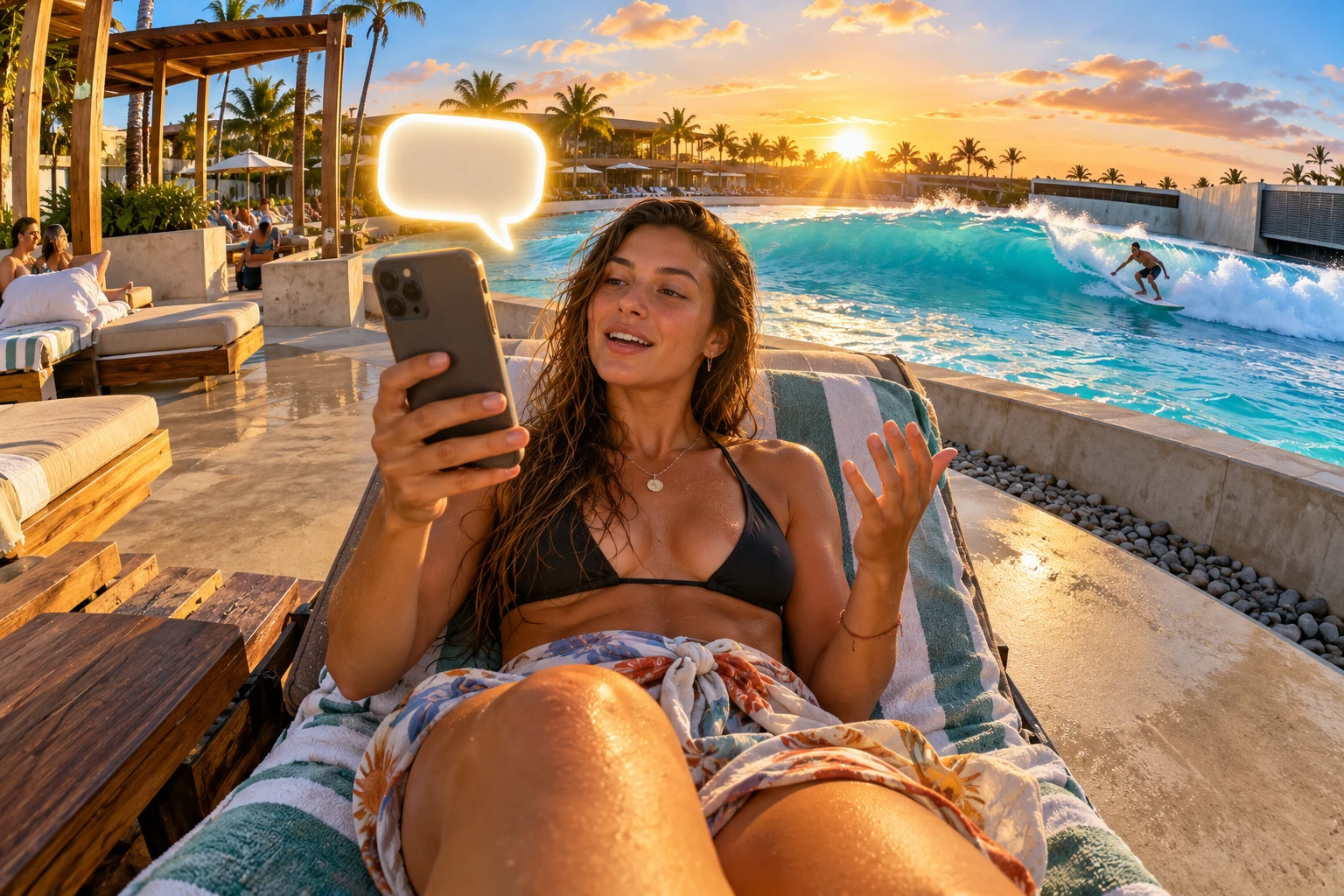
A mixed-use destination has as many front doors as it has audiences. A surfer searches for sessions. A family searches for a resort. An event planner searches for retreat venues. A buyer searches for homes with lifestyle amenities. Most of them won’t type “surf park.”
That’s the core digital challenge of the mixed-use model: every business inside the destination needs to be discoverable on its own terms while still reading as one place. We’ve written practical guides on both halves of that problem:
- How to Structure a Surf Resort Website Around Guest Search Intent covers which pages to build and how they connect. How to Market a Surf Resort as One Connected Destination covers keeping one brand story across every audience. Surf resort events and retreat bookings covers the group and corporate side.
The wave brings people in. The destination gives them reasons to stay.
The mixed-use shift is good news for the industry. It brings surf culture to people who may never paddle out, it creates more stable business models, and it turns a single attraction into a place people return to. The developers who plan for that early, physically and digitally, will be the ones visitors can actually find.
Frequently asked questions
What is a mixed-use surf park?
A mixed-use surf park combines an artificial surf lagoon with other uses such as lodging, dining, retail, wellness, event space or homes. The wave is the anchor, and the other uses serve visitors and residents who aren’t surfing at the moment.
Why are surf parks adding hotels, restaurants and homes?
A surf lagoon can only hold a limited number of surfers at once, and visits average three to four hours. Other amenities serve non-surfers, keep visitors longer, and add revenue beyond surf sessions.
Are most new surf parks mixed-use?
Many are. Recent industry coverage shows a growing share of projects combining surf with hospitality, food and beverage, and residential development, though standalone surf facilities still exist.
Related reading: How Long Does It Take to Build a Surf Park? · The Billion-Dollar Vision Beyond the Wave
Planning a surf resort or mixed-use destination? Ohana Digital Marketing helps resorts and destinations get found by every audience they serve. See how we work with resorts and destinations.